Why Diets Fail: The Hormonal Side of Weight Gain
Why Diets Fail: The Hormonal Side of Weight Gain
Many people believe that losing weight is simply about eating less and exercising more. While calories do matter, hormones play an equally important role in determining how your body stores fat, burns energy, and regulates appetite. Hormonal imbalances, poor sleep, stress, and metabolic changes can make weight loss much more difficult, even when you're following a healthy diet. Understanding these biological factors can help you adopt a more effective and sustainable approach to weight management.
Why Weight Loss Isn't Just About Calories
Your body is designed to protect itself from starvation. When calorie intake drops significantly, your metabolism naturally slows down, hunger increases, and the body tries to conserve energy. This protective response helped humans survive during food shortages, but today it can make long-term weight loss challenging.
If hormones that regulate appetite, metabolism, and fat storage become imbalanced, losing weight can feel much harder than expected—even when you're eating well and exercising regularly.
The Hormones That Influence Weight Gain
| Hormone | Role in Weight Gain |
|---|---|
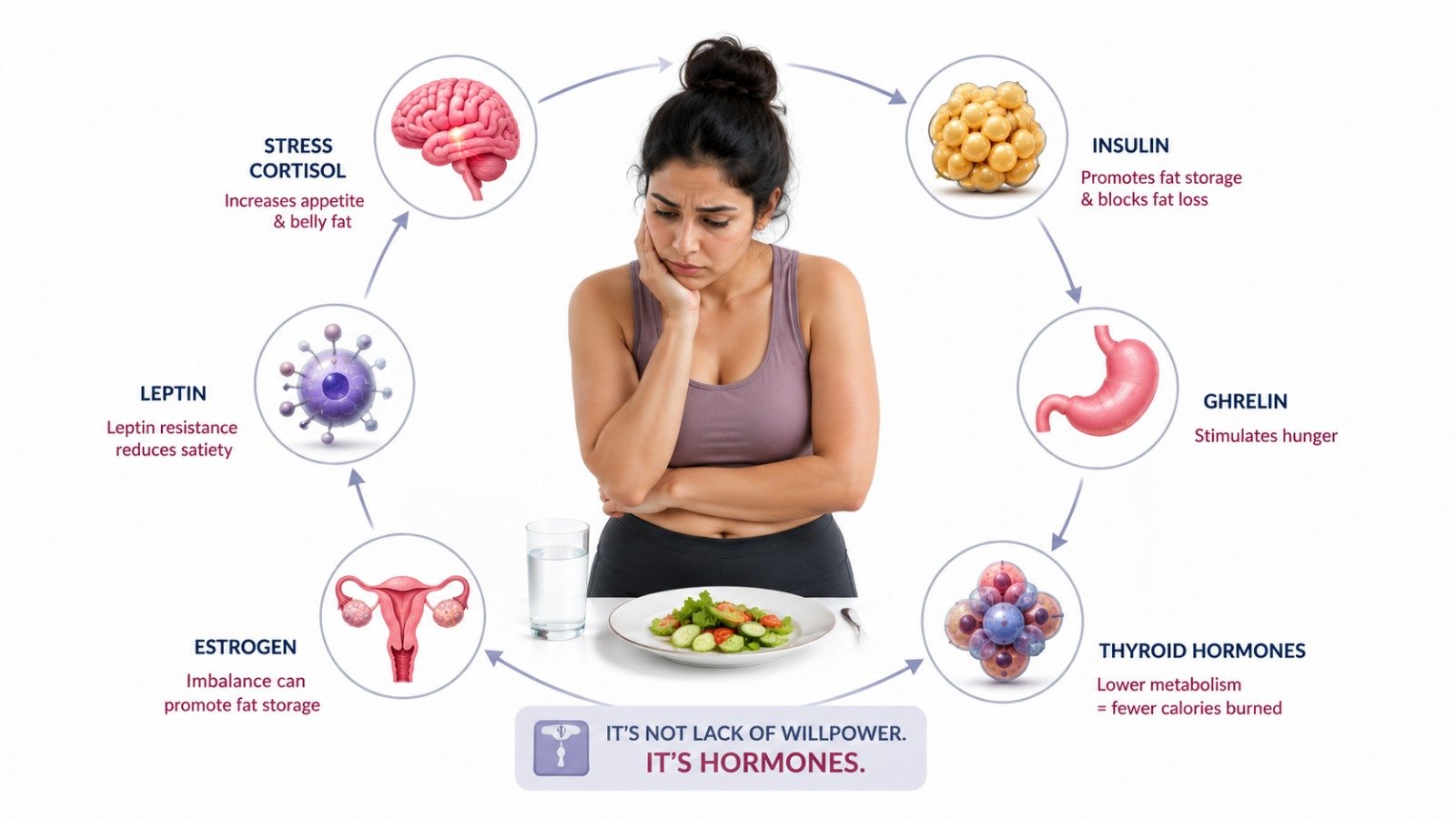
| Insulin | High insulin levels caused by insulin resistance encourage fat storage and make fat burning more difficult. |
| Cortisol | Chronic stress raises cortisol, increasing hunger, sugar cravings, abdominal fat, and poor sleep. |
| Thyroid Hormones | An underactive thyroid slows metabolism, reduces energy levels, and can make weight loss more difficult. |
| Leptin | Leptin signals fullness. Reduced leptin activity can increase hunger and reduce satisfaction after meals. |
| Ghrelin | Known as the "hunger hormone," ghrelin rises with poor sleep and restrictive dieting, increasing appetite. |
| Sex Hormones | Changes in estrogen, progesterone, or testosterone can alter fat distribution, muscle mass, and appetite. |
Why Crash Diets Often Fail
Very restrictive diets may produce rapid weight loss initially, but the body quickly adapts by conserving energy. As metabolism slows, hunger hormones increase and everyday movement often decreases without you realizing it.
This combination can lead to:
- Persistent hunger
- Low energy levels
- Weight loss plateaus
- Muscle loss instead of fat loss
- Weight regain after stopping the diet
This biological response explains why many people regain lost weight despite their best efforts. It is not simply a lack of willpower—it is the body's natural defense mechanism.
Everyday Factors That Can Disrupt Hormones
Several lifestyle and medical factors can worsen hormonal weight gain:
- Poor-quality sleep
- Chronic stress
- Highly processed, low-fiber diets
- Low muscle mass
- Insulin resistance or prediabetes
- Perimenopause or menopause
- Hypothyroidism
- Polycystic Ovary Syndrome (PCOS)
- Certain medications that promote weight gain
These factors often occur together, making weight management more complex than simply reducing calories.
A Smarter Approach to Healthy Weight Loss
Successful long-term weight management focuses on improving overall metabolic health rather than relying on extreme dieting.
- Eat adequate protein to preserve muscle.
- Choose high-fiber, minimally processed foods.
- Include regular strength training and physical activity.
- Prioritize 7–9 hours of quality sleep.
- Manage stress through relaxation techniques and regular exercise.
- Seek medical evaluation if symptoms suggest thyroid disease, insulin resistance, PCOS, or hormonal imbalance.
- Consider medical therapies when lifestyle measures alone are insufficient.
Key Takeaways
- Weight gain is influenced by hormones as well as calories.
- Insulin, cortisol, thyroid hormones, leptin, ghrelin, and sex hormones all affect body weight.
- Crash diets can slow metabolism and increase hunger, making weight regain more likely.
- Healthy sleep, stress management, strength training, and balanced nutrition support hormone balance.
- Persistent weight gain may warrant evaluation for underlying hormonal or metabolic conditions.
Bottom Line
Diets often fail because weight gain is driven by biology as much as behavior. Hormones that regulate hunger, metabolism, fat storage, and muscle health can make losing weight much harder than simply counting calories. Instead of relying on short-term restrictive diets, focus on a sustainable plan that includes nutritious foods, regular exercise, good sleep, stress management, and medical evaluation when hormonal imbalances are suspected. Addressing the underlying causes offers the best chance of achieving healthy, long-lasting weight loss.