“Thin doesn’t mean healthy” is especially true in India.
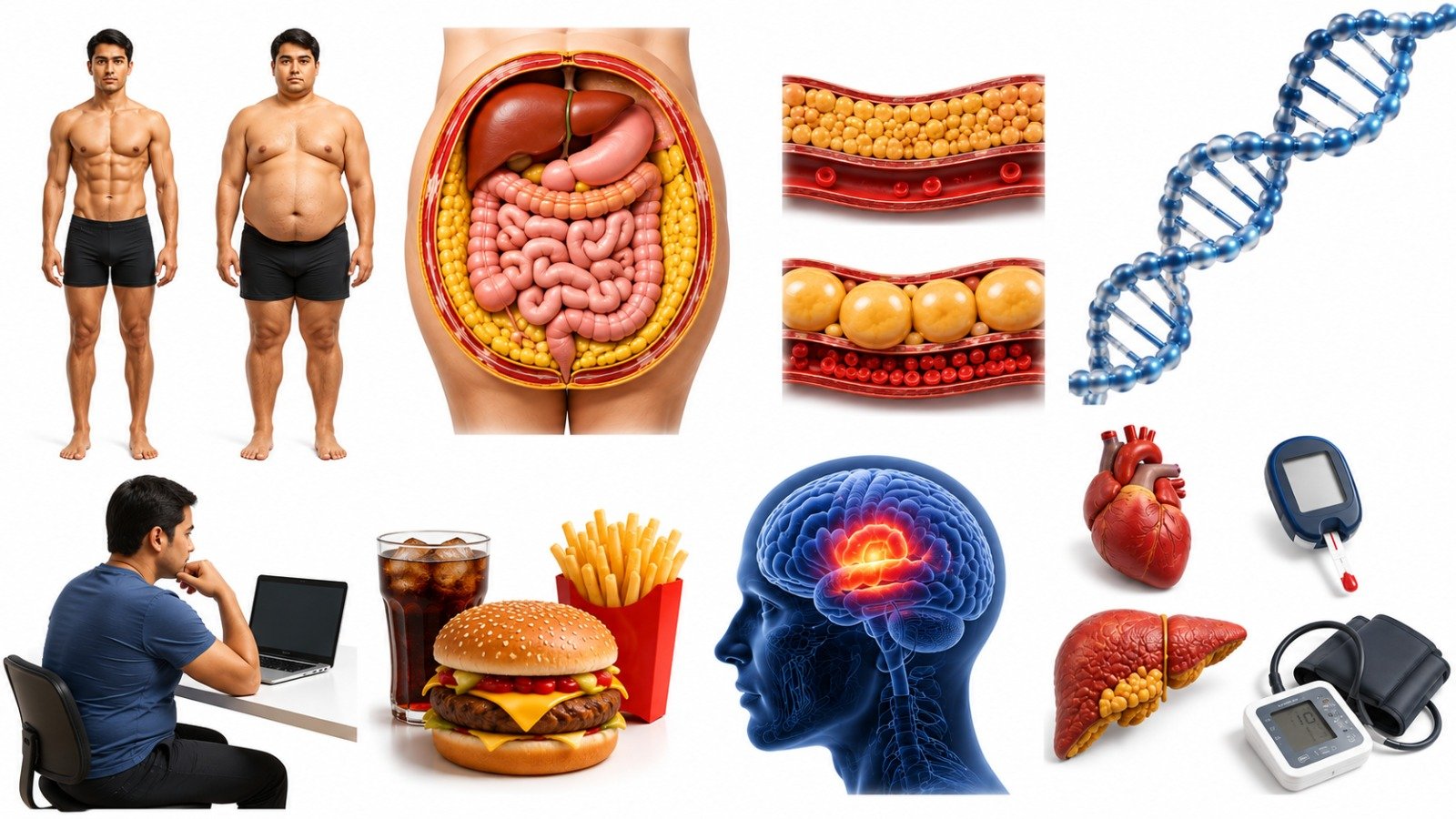
You can look slim on the outside and still carry a significant amount of dangerous visceral fat around your internal organs. This phenomenon is often described as TOFI — Thin Outside, Fat Inside — and is particularly relevant when discussing metabolic health in Indian and South Asian populations. A normal BMI does not always mean low metabolic risk.
What Does TOFI Actually Mean?
TOFI describes a person who appears lean or has a normal BMI but carries a relatively high proportion of body fat, particularly visceral fat, while having comparatively low muscle mass.
Unlike the fat that sits directly underneath the skin, visceral fat is stored deeper inside the abdomen around organs such as the liver and intestines. It is metabolically active and can contribute to insulin resistance and other metabolic problems.
| What You See | What May Be Happening Inside |
|---|---|
| Normal or low BMI | Body fat percentage may still be relatively high. |
| Slim arms and legs | Muscle mass may be lower than expected. |
| Small overall body size | Visceral fat may be accumulating around abdominal organs. |
| Looks "fit" | Insulin resistance, fatty liver, or abnormal cholesterol may still be present. |
Why Can This Be More Common in Indians and South Asians?
Indian and South Asian populations can develop metabolic risk at lower levels of BMI compared with some other ethnic groups. Research has described a characteristic pattern of higher body fat, lower muscle mass, and greater central fat accumulation at a given BMI.
Several factors may contribute, including genetics, early-life nutrition, physical activity, diet, sleep, and environmental changes. Modern lifestyles can further increase the risk through increased consumption of refined carbohydrates, sugary foods, ultra-processed foods, and reduced physical activity.
- Greater tendency toward abdominal and visceral fat accumulation.
- Lower muscle mass relative to body weight in some individuals.
- Higher susceptibility to insulin resistance.
- Family history of diabetes and cardiometabolic disease.
- Dietary patterns high in refined carbohydrates and added sugar.
- Low physical activity and prolonged sitting.
Why Visceral Fat Is More Concerning
Visceral fat is not simply stored energy. It is biologically active tissue that can release inflammatory substances and contribute to metabolic dysfunction.
Excess visceral fat is associated with an increased risk of:
- Insulin resistance
- Prediabetes and Type 2 Diabetes
- Fatty liver disease
- High triglycerides
- Low HDL cholesterol
- High blood pressure
- Cardiovascular disease
This is why someone can have a normal number on the weighing scale while still having significant metabolic risk.
Signs You May Have High Visceral Fat
You cannot reliably determine visceral fat simply by looking at your body. However, certain clues may justify a closer assessment.
- A relatively slim body with a noticeable central abdomen or "pot belly."
- Family history of early diabetes, fatty liver, or heart disease.
- Normal BMI but elevated triglycerides.
- Low HDL cholesterol.
- Borderline or elevated fasting glucose or HbA1c.
- Fatty liver detected on imaging.
- Low muscle mass despite normal body weight.
How Can You Know What Is Happening Inside?
The weighing scale and BMI provide useful information, but they do not tell you how much of your weight is muscle, subcutaneous fat, or visceral fat.
| Assessment | What It Can Tell You |
|---|---|
| Waist Circumference | Provides a practical measure of central obesity and abdominal fat. |
| BIA / Body Composition Analysis | Can estimate body fat, skeletal muscle, and visceral fat-related measures. |
| DEXA | Provides detailed assessment of body composition and regional fat distribution. |
| Blood Tests | Fasting glucose, HbA1c, lipid profile, and liver tests can identify metabolic risk. |
| Ultrasound | May help identify fatty liver when clinically appropriate. |
Why BMI Alone May Not Tell the Whole Story
BMI is calculated from weight and height and is useful for population-level assessment, but it does not distinguish between muscle and fat or show where fat is stored.
Two people with exactly the same BMI can have very different body compositions and metabolic risks. For South Asians, this is particularly important because metabolic disease can occur at lower BMI thresholds than those traditionally associated with obesity in other populations.
In other words: don't judge metabolic health only by the number on the weighing scale.
What Actually Helps a TOFI Body?
The goal is not simply to become lighter. The focus should be on reducing visceral fat while building and protecting muscle.
1. Build and Protect Muscle
- Include resistance or strength training around 2–3 days per week.
- Train major muscle groups including the legs, hips, back, chest, and core.
- Combine strength training with regular walking or aerobic activity.
- Avoid prolonged periods of sitting whenever possible.
2. Improve Food Quality
- Include a source of protein at every meal.
- Choose dal, beans, curd, paneer, eggs, fish, chicken, soy, or other protein-rich foods.
- Increase vegetables, salads, legumes, nuts, and seeds.
- Reduce sugary drinks, sweets, biscuits, packaged snacks, and highly refined foods.
- Replace some refined grains with whole grains, millets, or less-refined carbohydrate sources according to your individual needs.
3. Move More Throughout the Day
- Walk regularly rather than sitting for prolonged periods.
- Include brisk walking or other cardiovascular exercise most days.
- Use daily activity targets that are realistic and sustainable for you.
If You Are Thin, Should You Still Get Checked?
If you are an Indian or South Asian adult with a normal BMI, routine health screening can still be important—especially if you have a family history of diabetes, fatty liver, high cholesterol, or cardiovascular disease.
Depending on your individual risk, your doctor may consider:
- Fasting blood glucose.
- HbA1c.
- Lipid profile.
- Blood pressure.
- Waist circumference.
- Liver function testing.
- Evaluation for fatty liver when clinically indicated.
- Body composition assessment when available and appropriate.
The Best Goal Is Not Just "Stay Under 60 kg"
For many Indians, focusing exclusively on body weight can miss the bigger picture. A healthier goal is to improve body composition and metabolic health.
| Focus Less On | Focus More On |
|---|---|
|
✘ Scale weight alone ✘ BMI alone ✘ Looking slim in clothes ✘ Crash dieting |
✔ Muscle mass ✔ Waist circumference ✔ Visceral fat ✔ Blood sugar and HbA1c ✔ Cholesterol and triglycerides ✔ Liver health ✔ Physical fitness |
Quick TOFI Checklist
| Check | Why It Matters |
|---|---|
|
✔ Waist circumference ✔ Body composition ✔ HbA1c ✔ Lipid profile ✔ Blood pressure ✔ Liver health |
• Central fat • Muscle vs fat • Diabetes risk • Cardiovascular risk • Metabolic health • Fatty liver risk |
Bottom Line
Thin does not always mean metabolically healthy. Some Indians and South Asians with a normal BMI can carry significant visceral fat and have relatively low muscle mass, increasing their risk of insulin resistance, diabetes, fatty liver, and cardiovascular disease. The answer is not simply to lose more weight. The better strategy is to build muscle, stay physically active, improve the quality of carbohydrates and overall diet, and check important metabolic markers when appropriate. What matters is not only what you see on the outside, but what is happening inside your body.