Set Point Theory: Why Your Body “Fights Back” When You Lose Weight
Set Point Theory: Why Your Body “Fights Back” When You Lose Weight
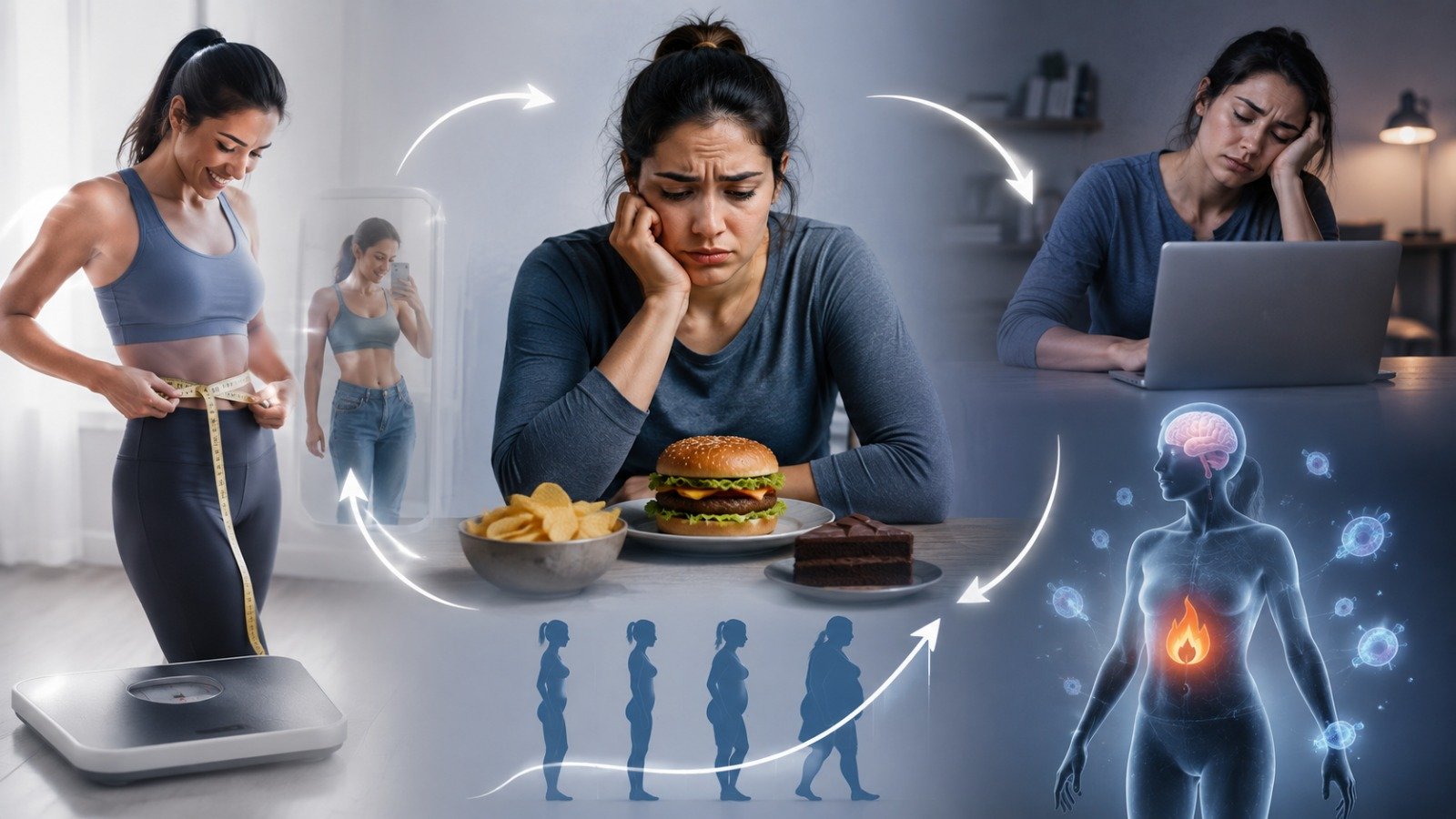
Have you ever lost weight successfully, only to find that hunger increases, energy falls, and the weight gradually comes back? This experience is common and is not simply a matter of willpower. The body can respond to weight loss by increasing hunger and reducing energy expenditure, making long-term weight maintenance more difficult.
What Is Set Point Theory?
Your body does not treat body weight as just a number on a weighing scale. The brain, hormones, fat tissue, gut, and nervous system work together to regulate appetite, energy intake, and energy expenditure.
When you lose weight, these systems may respond as if the body's energy stores are being threatened. Hunger can increase while the amount of energy your body uses decreases.
The original idea of a fixed “set point” suggests that the body defends one specific weight. Today, weight regulation is generally understood to be more flexible. Genetics, sleep, stress, food environment, medications, physical activity, and previous weight history can all influence the weight range your body tends to defend.
How Does the Body Fight Weight Loss?
After weight loss, the body may create an “energy gap.” You may feel more hungry at the same time that your body needs fewer calories than it did before.
| Change After Weight Loss | What You May Notice |
|---|---|
| Hunger increases | You may feel hungrier and think about food more often. |
| Fullness signals change | Meals may feel less satisfying than they did before weight loss. |
| Energy expenditure falls | Your body may use fewer calories because you are smaller and, in some people, because of adaptive changes in energy expenditure. |
| Spontaneous activity may decrease | You may unconsciously walk, move, or fidget less during the day. |
Why Does Hunger Increase?
Weight loss can alter several hormones involved in appetite regulation. Ghrelin, a hormone that stimulates hunger, may increase. At the same time, signals involved in fullness and energy balance—including leptin, GLP-1, peptide YY (PYY), cholecystokinin, and insulin—can decrease.
As a result, food may become more tempting, portions may feel less satisfying, and controlling appetite can become harder.
Importantly, some appetite-related changes have been observed to persist for an extended period after diet-induced weight loss. This helps explain why maintaining weight loss can remain challenging even after the initial weight-loss phase is over.
Your Body Also Needs Fewer Calories
A smaller body naturally requires fewer calories to maintain itself and perform daily activities. This means that the calorie intake that produced weight loss initially may eventually become enough to maintain the lower weight—or even contribute to regain.
Some people also experience adaptive thermogenesis, meaning energy expenditure becomes somewhat lower than would be expected from the change in body size alone. The magnitude and persistence of this effect vary between individuals.
You may also move less without realizing it—taking fewer steps, fidgeting less, or reducing spontaneous physical activity. These small changes can add up over time.
Why Can High-Calorie Foods Become Harder to Resist?
After weight loss, stronger hunger signals and weaker fullness signals can make highly palatable, calorie-dense foods more appealing.
The modern food environment can make this biological response even harder to manage. Highly processed foods are widely available, while stress, poor sleep, busy schedules, and emotional eating can further increase the tendency to choose convenient, energy-dense foods.
This is one reason why weight regain should not automatically be described as a “discipline problem.” Long-term weight management involves biological, behavioral, environmental, and medical factors.
Why Is Weight Regain So Common?
Weight regain is not inevitable, but it is common because several biological pressures can occur at the same time.
- Your body burns fewer calories after becoming smaller.
- Hunger signals can become stronger.
- Fullness signals can become weaker.
- Spontaneous physical activity may decrease.
- Calorie-dense foods remain readily available.
Together, these changes can make maintaining weight loss much harder than losing the weight in the first place.
What Helps You Work With Your Biology?
| Strategy | Why It Helps |
|---|---|
| Lose weight gradually | Extreme restriction can be difficult to sustain and may increase hunger and fatigue. |
| Prioritize protein and fiber | Protein-rich foods, vegetables, fruit, legumes, and whole grains can improve fullness. |
| Strength training | Resistance exercise helps preserve muscle, strength, and physical function during weight loss. |
| Stay physically active | Walking and regular activity help support long-term energy balance. |
| Plan for maintenance | Maintaining a lower weight requires a long-term strategy, not just a short-term diet. |
| Protect sleep and manage stress | Poor sleep and chronic stress can worsen appetite, cravings, and eating patterns. |
When Is Medical Treatment Helpful?
For some people, lifestyle changes alone are not enough to overcome the biological pressures associated with obesity and weight regain.
Evidence-based obesity treatment may include structured behavioral therapy, anti-obesity medications, and bariatric surgery for selected patients. The appropriate approach depends on factors such as health conditions, degree of obesity, previous treatment attempts, and individual goals.
If weight continues to return despite consistent lifestyle efforts, discuss the situation with your healthcare provider rather than assuming you have failed.
A Better Way to Measure Success
The number on the scale is important, but it is not the only measure of health.
- Improved blood glucose control.
- Lower blood pressure.
- Improved cholesterol and triglyceride levels.
- Better sleep or improvement in sleep apnea.
- Greater strength and mobility.
- Improved energy and physical function.
- Better overall quality of life.
A weight-loss plateau does not necessarily mean you have failed. It may simply mean that your body has adapted and your treatment plan needs adjustment.
Quick Takeaway
| What Happens | Why It Matters |
|---|---|
| Hunger increases | Eating less can become biologically harder. |
| Energy expenditure decreases | The body needs fewer calories at a lower weight. |
| Appetite signals change | Food cravings and reduced fullness can make maintenance difficult. |
| Weight regain may occur | Long-term maintenance often requires ongoing support and planning. |
Bottom Line
Weight regain after weight loss is not simply a failure of willpower. The body can respond to weight loss by increasing hunger, reducing fullness signals, lowering energy expenditure, and making calorie-dense foods more difficult to resist. Set point theory helps explain these biological adaptations, although modern understanding recognizes that body weight is influenced by many interacting factors rather than one fixed number. Sustainable weight management usually requires long-term attention to nutrition, physical activity, muscle preservation, sleep, stress, and—when appropriate—medical treatment and follow-up.